
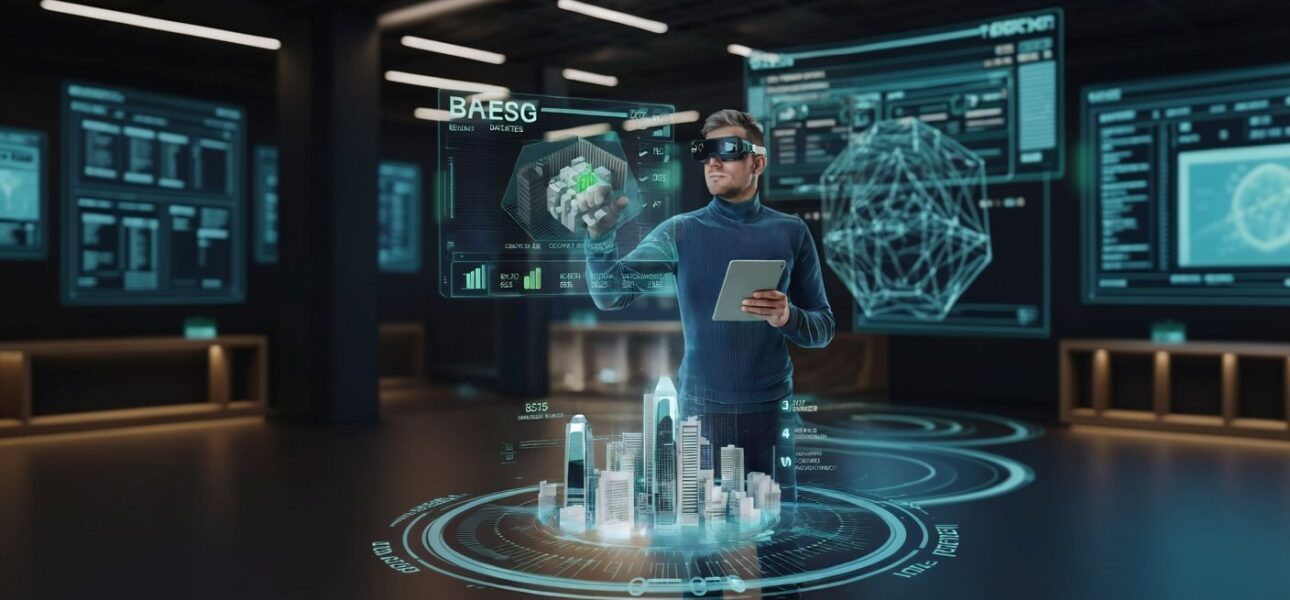
Facility management has entered a new era of intelligence, automation, and data-driven decision-making. In 2026, organizations across industries are rapidly adopting advanced technologies to improve operational efficiency, reduce costs, and enhance building performance. Traditional reactive maintenance models are being replaced with predictive systems that monitor assets, forecast failures, and optimize resources in real time.
Modern buildings are evolving into interconnected ecosystems where artificial intelligence, sensors, automation platforms, and cloud analytics work together to maintain optimal performance. From predictive maintenance to sustainability initiatives, these advancements are redefining how facilities are operated and maintained.
Below are the most important facility management trends transforming buildings and infrastructure in 2026.
Predictive Maintenance Powered by Artificial Intelligence
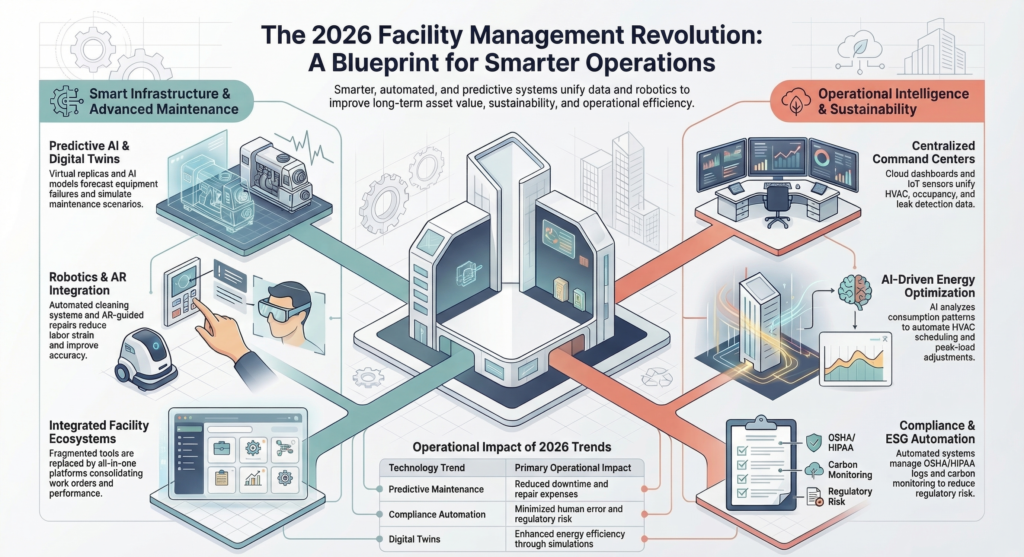
Predictive maintenance has become one of the most significant advancements in facility management. Artificial intelligence and machine learning models analyze historical equipment data, sensor readings, and performance patterns to predict potential equipment failures before they occur.
Instead of waiting for HVAC systems, pumps, or electrical infrastructure to fail, facility managers can now identify early warning signs and schedule maintenance proactively. This approach significantly reduces unexpected downtime, lowers repair costs, and extends the lifespan of critical assets.
Organizations implementing predictive maintenance are experiencing fewer disruptions while improving overall operational reliability.
IoT Sensors Enabling Real-Time Building Monitoring
The adoption of Internet of Things (IoT) sensors has dramatically increased the level of visibility facility managers have over building operations. These sensors continuously monitor key environmental and operational metrics, including:
- HVAC efficiency
- Occupancy patterns
- Indoor air quality
- Temperature and humidity levels
- Water leaks and plumbing performance
- Energy consumption
- Equipment vibrations and performance
With real-time data flowing into centralized platforms, facility managers can detect anomalies immediately and make informed decisions that improve efficiency and safety.
This level of real-time insight is essential for modern smart buildings and large-scale facilities.
Digital Twins Transforming Building Planning and Operations
Digital twin technology is rapidly becoming a powerful tool for facility management. A digital twin is a virtual replica of a building or infrastructure asset that mirrors its real-world performance through live data.
Facility managers can simulate maintenance scenarios, test operational changes, and analyze energy performance without disrupting real operations. Digital twins also allow teams to visualize how systems interact within the building and identify inefficiencies before they become problems.
By enabling predictive planning and simulation-based decision-making, digital twins are helping organizations optimize both short-term operations and long-term infrastructure strategies.
Centralized Facility Command Centers
As building systems become more complex, organizations are moving toward centralized command centers that consolidate operational data into a single interface.
Cloud-based facility management platforms now integrate:
- Asset management systems
- Work order management
- IoT sensor data
- Energy monitoring systems
- compliance documentation
- security monitoring
These centralized dashboards create a “single source of truth” for facility operations, allowing teams to monitor multiple buildings and assets from one platform. This integration reduces fragmented workflows and allows faster, more coordinated responses to operational issues.
Sustainability and ESG Integration
Sustainability is no longer optional in modern facility management. Organizations are increasingly integrating Environmental, Social, and Governance (ESG) principles into their building operations.
Key sustainability initiatives include:
- Energy-efficient retrofits
- smart lighting systems
- carbon emissions monitoring
- renewable energy integration
- water conservation technologies
- sustainable building certifications such as LEED
Facility managers are playing a critical role in helping organizations meet regulatory requirements and corporate sustainability targets while reducing long-term operational costs.
Robotics and Automation in Facility Operations
Robotics is beginning to transform routine facility operations. Automated systems are now being used for tasks such as floor cleaning, security patrols, and infrastructure inspections.
Robotic technologies help organizations improve consistency while reducing labor strain and operational risks. Inspection robots can also access hard-to-reach areas of buildings and infrastructure, identifying structural issues or maintenance requirements that might otherwise go unnoticed.
As robotics technology becomes more accessible, automated facility operations will continue to expand across commercial and industrial environments.
Compliance Automation for Regulated Industries
Facilities operating in regulated industries such as healthcare, manufacturing, and pharmaceuticals must maintain strict compliance with safety and operational standards.
Modern facility management platforms now automate compliance tracking by generating digital maintenance logs, inspection reports, and audit trails. Automated systems can also ensure adherence to regulatory frameworks such as OSHA, HIPAA, and other industry-specific standards.
By reducing manual documentation and human error, compliance automation helps organizations maintain consistent operational accountability while simplifying regulatory audits.
Augmented Reality for Facility Technicians
Augmented reality (AR) is emerging as a valuable tool for facility maintenance teams. AR-enabled headsets and mobile devices can provide technicians with visual overlays, real-time instructions, and remote expert support while performing inspections or repairs.
For example, technicians can view system diagrams directly on equipment while receiving step-by-step repair guidance. This technology improves efficiency, reduces training time, and helps technicians resolve complex issues more quickly.
AI-Based Energy Optimization
Energy consumption remains one of the largest operational expenses for large facilities. Artificial intelligence is now being used to analyze building energy patterns and automatically optimize HVAC scheduling, lighting usage, and peak-load management.
AI-driven energy optimization systems continuously learn from usage patterns and environmental conditions to reduce energy waste while maintaining occupant comfort.
These technologies are helping organizations achieve both sustainability goals and measurable cost savings.
Integrated Facility Ecosystems
One of the most important trends in 2026 is the shift toward fully integrated facility ecosystems. Instead of relying on multiple disconnected tools, organizations are adopting unified platforms that combine asset management, maintenance scheduling, compliance tracking, energy monitoring, and analytics.
This integration improves operational visibility, streamlines workflows, and enables facility teams to manage complex infrastructure more effectively.
The Future of Facility Management
The future of facility management will be increasingly defined by intelligent automation, connected infrastructure, and predictive analytics. Organizations that embrace these technologies will gain significant advantages in operational efficiency, asset performance, and sustainability outcomes.
Companies like Wellstead Management are actively integrating these advanced solutions to help organizations operate smarter, safer, and more resilient facilities. By leveraging cutting-edge technology and data-driven strategies, facility management is evolving into a critical driver of long-term organizational success.