

The year 2026 has become a defining moment for facility and infrastructure leaders. Across healthcare systems, corporate campuses, industrial operations, and multi-site organizations, facilities teams are facing a complex intersection of operational pressures, regulatory demands, and technological transformation.
Facilities are no longer simply responsible for maintaining buildings. Today, they are responsible for operational resilience, regulatory compliance, cybersecurity protection, sustainability performance, and long-term asset optimization.
Organizations that fail to adapt their facility management strategies risk higher operational costs, equipment failures, regulatory penalties, and security vulnerabilities.
This article explores the top facility management challenges of 2026 and the strategic approaches organizations are using to overcome them.
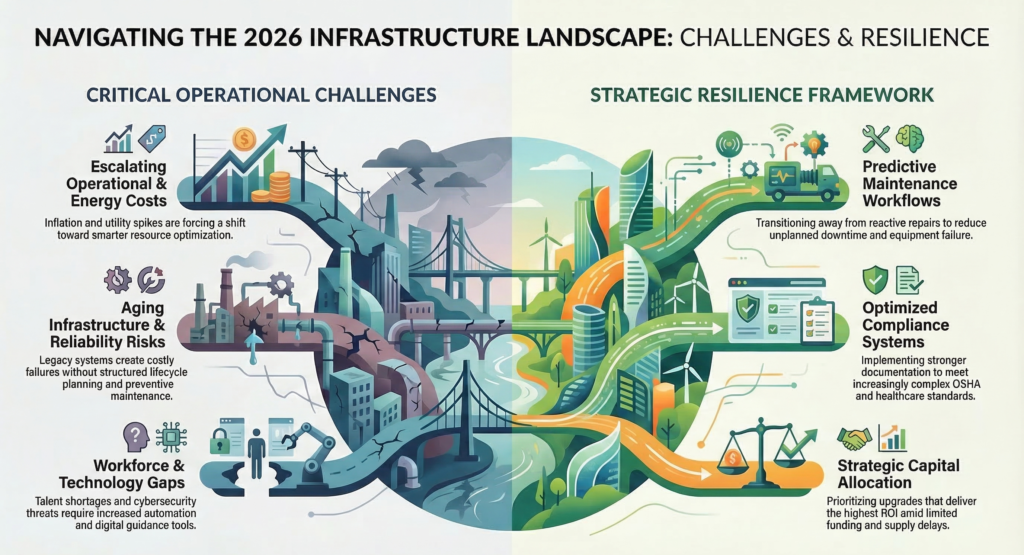
1. Rising Operational and Energy Costs
Energy prices and operational expenses have continued to rise globally, placing significant strain on facility budgets.
Utilities, maintenance services, and operational materials have become more expensive due to inflation and increased demand. Facilities that rely on reactive maintenance often experience even greater costs due to emergency repairs and inefficient equipment performance.
Forward-thinking organizations are addressing this challenge by:
• Implementing energy monitoring systems
• Conducting equipment performance audits
• Modernizing high-energy equipment
• Introducing predictive maintenance programs
These strategies allow organizations to reduce operational waste and gain greater control over their infrastructure expenses.
2. Increasing Regulatory and Compliance Requirements
Regulatory oversight has intensified in sectors such as healthcare, manufacturing, and public infrastructure.
Facilities must comply with a wide range of evolving regulations, including:
• OSHA safety standards
• Healthcare accreditation requirements
• Environmental and sustainability regulations
• Fire and life safety codes
• Equipment inspection documentation
Compliance failures can result in operational shutdowns, penalties, and reputational damage.
Organizations are now prioritizing centralized compliance systems, digital inspection tracking, and structured documentation frameworks to ensure regulatory readiness at all times.
3. Aging Infrastructure and Equipment
Many facilities around the world operate with infrastructure that is 20–40 years old. Aging HVAC systems, electrical components, plumbing networks, and structural assets present significant operational risks.
Without structured lifecycle planning, organizations face:
• Unexpected equipment breakdowns
• Emergency repair costs
• Safety hazards
• Reduced operational reliability
Facility leaders are increasingly adopting asset lifecycle management programs that identify high-risk systems and schedule strategic upgrades before failures occur.
4. Talent Shortages in the Facilities Workforce
One of the most pressing issues in facility management is the shortage of skilled technicians and maintenance professionals.
Many experienced technicians are retiring, while fewer workers are entering the field.
This workforce gap has forced organizations to rethink how facility teams operate.
Leading organizations are responding by:
• Implementing digital maintenance platforms
• Providing structured technician training programs
• Using automation and remote monitoring tools
• Standardizing maintenance procedures
These tools help teams operate more efficiently even with limited staffing resources.
5. Cybersecurity Threats in Smart Buildings
Modern buildings are becoming increasingly connected through IoT sensors, building automation systems, and cloud-based management platforms.
While these technologies improve operational efficiency, they also introduce new cybersecurity vulnerabilities.
Smart building systems now control critical infrastructure including:
• HVAC systems
• access control systems
• elevators
• energy management platforms
• surveillance networks
If compromised, these systems can disrupt entire facilities.
Organizations are strengthening protection through:
• network segmentation
• building system security audits
• secure cloud architecture
• cybersecurity monitoring tools
Facility cybersecurity is now considered a core operational responsibility rather than just an IT concern.
6. Reactive Maintenance and Unplanned Downtime
Many organizations still rely heavily on reactive maintenance, meaning equipment is repaired only after failure occurs.
This approach results in:
• operational disruptions
• costly emergency repairs
• safety risks
• productivity loss
In 2026, the shift toward predictive maintenance is accelerating.
Predictive strategies use equipment data, sensors, and performance analytics to detect early warning signs of failure.
This allows facilities teams to fix problems before downtime occurs, dramatically improving operational stability.
7. Sustainability and Carbon Reduction Pressure
Environmental responsibility is no longer optional. Organizations across industries are under growing pressure to reduce carbon emissions and improve building efficiency.
Facilities play a major role in this effort because buildings account for nearly 40% of global energy consumption.
Common sustainability initiatives include:
• upgrading energy systems
• modernizing lighting infrastructure
• implementing smart energy monitoring
• adopting renewable energy integration
Facilities teams must balance these initiatives with operational realities and capital constraints.
8. Technology Integration Challenges
Many organizations struggle to integrate new technology with existing infrastructure systems.
Legacy building systems often operate independently, making it difficult to connect them with modern digital platforms.
This leads to fragmented operations where data cannot be easily analyzed or shared.
Successful organizations approach modernization through phased integration strategies, gradually connecting systems into centralized operational platforms.
9. Capital Allocation and Budget Constraints
Facilities leaders must make strategic decisions about how limited capital budgets are allocated.
Major infrastructure upgrades compete with other organizational priorities such as expansion, staffing, and digital transformation.
Facility leaders must evaluate:
• equipment lifecycle costs
• operational risk exposure
• regulatory compliance impact
• long-term ROI
Strategic planning frameworks help organizations identify which upgrades deliver the highest operational value.
10. Supply Chain Disruptions and Equipment Delays
Supply chain instability has created new challenges for facilities teams.
Parts, materials, and specialty equipment often have longer lead times than in previous years.
Without proper planning, facilities may face extended downtime while waiting for critical components.
Organizations are responding by:
• maintaining strategic spare part inventories
• building stronger supplier networks
• implementing preventive maintenance schedules
These strategies reduce the risk of operational disruption.
How Wellstead Management Helps Organizations Navigate These Challenges
Facility management in 2026 requires a proactive, strategic approach rather than reactive problem-solving.
Wellstead Management LLC supports organizations by implementing structured operational systems that improve reliability, compliance, and performance.
Their approach includes:
• predictive maintenance frameworks
• regulatory compliance management systems
• lifecycle infrastructure planning
• operational risk assessments
• technology integration strategies
By aligning facility operations with long-term organizational goals, Wellstead helps organizations reduce risk, improve efficiency, and maintain operational stability in a rapidly evolving environment.
Facility management is undergoing a major transformation. Rising costs, regulatory complexity, infrastructure aging, cybersecurity threats, and workforce shortages are reshaping how organizations approach building operations.
Organizations that adopt predictive strategies, digital systems, and proactive planning will be best positioned to maintain safe, efficient, and resilient facilities.
As operational complexity continues to grow, the role of strategic facility management will become more critical than ever.
FAQ
What are the biggest facility management challenges in 2026?
The biggest challenges include rising energy costs, regulatory compliance complexity, aging infrastructure, workforce shortages, cybersecurity threats in smart buildings, and supply chain delays.
Why is predictive maintenance important for facilities?
Predictive maintenance helps identify equipment problems before failures occur, reducing downtime, repair costs, and operational disruptions.
How do smart buildings create cybersecurity risks?
Smart buildings connect HVAC, security, and automation systems to networks. If not properly secured, these systems can be vulnerable to cyber attacks that disrupt operations.
How can facilities reduce operational costs?
Organizations can reduce costs through energy monitoring systems, preventive maintenance programs, equipment modernization, and optimized operational planning.